The US government sold $742 billion in Treasury securities last week. T-bill yields now trail surging inflation, and the bond market is betting the Fed will hike rates later this year—whether it wants to or not.
The Big Picture
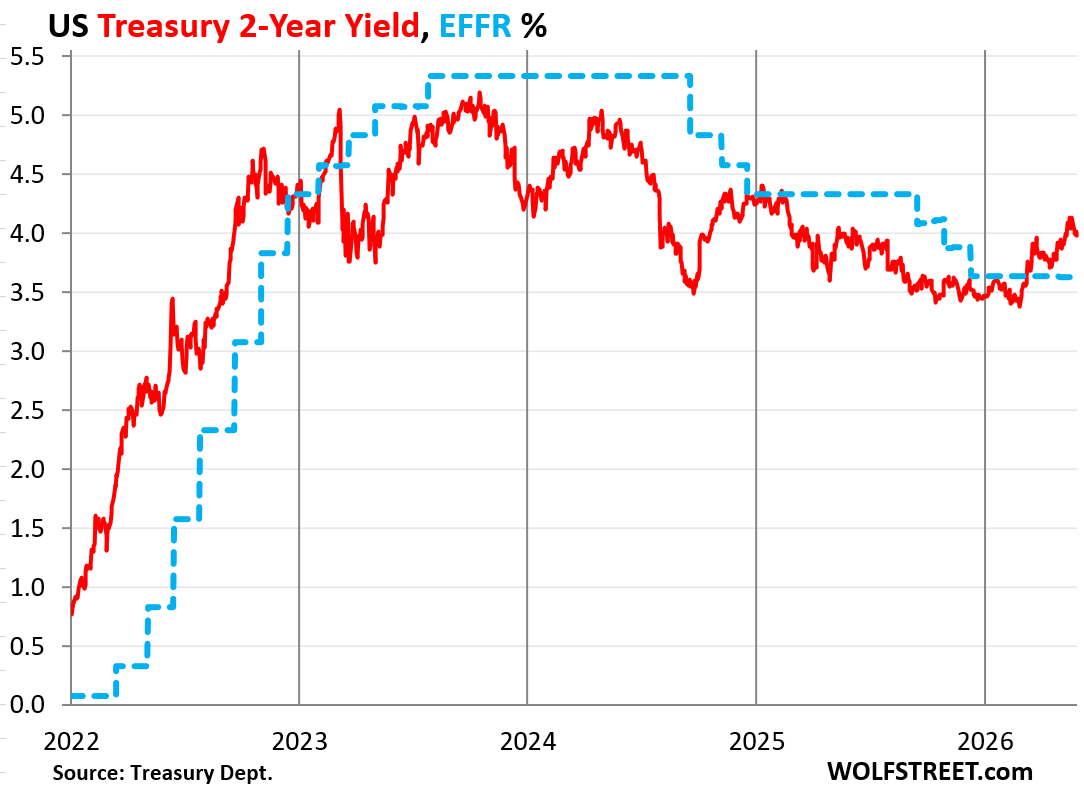
Last week's mega-auction wasn't an isolated event. It's the clearest signal yet that the Treasury needs to finance a growing deficit in an environment where inflation is accelerating. Short-term T-bill yields, typically the safest haven, now yield less than annualized inflation, meaning investors are losing purchasing power in real terms.
This phenomenon—negative real rates—is usually temporary in orderly markets. But when it persists, it signals the central bank is behind the curve. And the bond market, with its bet on rate hikes, is sending a clear message: the Fed will have to act late and fast.

“The bond market is screaming that the Fed is behind the curve, and belated rate hikes are coming.”
By the Numbers

- Record issuance: $742 billion in Treasury securities sold in a single week, a volume that reflects fiscal urgency.
- Negative real yield: Short-term T-bills yield below the annual inflation rate, eroding capital's real value.
- Market's bet: Fed funds futures price in at least two rate hikes before year-end, according to forward curves.
- Rising inflation: Core CPI exceeds 4%, well above the Fed's 2% target.
- Expanding deficit: Government spending continues to grow without a compensating tax base, forcing ever-larger debt issuances.
Why It Matters
The bond market's message isn't just technical; it's a macro warning. When investors demand higher yields to lend to the government short-term, they're saying inflation isn't transitory. And when the Fed doesn't respond, the market does it for them, pushing rates higher in a disorderly fashion.
The winners in this scenario are investors in inflation-indexed bonds (TIPS) and those exposed to real assets like real estate or commodities. The losers are holders of long nominal bonds, who will see portfolio values fall if rates rise, and variable-rate debtors, whose interest payments will spike.
The risk of a policy error is high. If the Fed waits too long, it may have to hike abruptly, triggering a recession. If it hikes prematurely, it could choke a fragile recovery. The market has already placed its bet: higher rates, sooner rather than later.
What This Means For You
- 1Fixed-income investors: Review your portfolio duration. Reduce exposure to long nominal bonds and consider TIPS or short-duration bonds.
- 2Homeowners with adjustable-rate mortgages: Prepare for higher payments. If possible, refinance to a fixed rate before rates rise further.
- 3Savers: High-yield savings accounts may offer better rates soon, but inflation will still eat purchasing power. Seek inflation-hedging assets.

What To Watch Next
The Fed's next meeting in June will be crucial. Look for any shift in language on inflation. If the Fed chair hints that hikes are on the table, markets will react instantly.
Also watch upcoming Treasury auctions in the coming weeks. If demand falters and yields rise further, pressure on the Fed will intensify. Friday's May employment report will provide clues on the economy's strength and the urgency to act.
The Bottom Line
The $742 billion bond sale isn't just a funding data point—it's a symptom of a fiscal imbalance the market is already punishing. The Fed will have to raise rates, likely sooner than it would like. For investors, the message is clear: adjust your portfolios now, because the cost of waiting will be higher. The bond market never lies; it only speaks when it's already late.
Deeper Context and Implications
To grasp the magnitude, look beyond the auction. The US fiscal deficit has ballooned to over 6% of GDP, and public debt exceeds $35 trillion. Each percentage point rise in interest rates adds hundreds of billions to debt service costs. This creates a vicious cycle: more debt leads to more issuance, pushing rates higher, which makes future debt more expensive.
The bond market has begun pricing this risk. The yield curve has flattened, with 10-year yields barely 50 basis points above 2-year T-bills. This is typical of an environment where the market expects the Fed to hike until it slows the economy—or even triggers a recession. The term premium, which compensates investors for future inflation risk, has widened significantly.
Foreign investors, who hold about 30% of Treasury debt, are showing caution. China and Japan, the largest foreign holders, have reduced their holdings in recent months. If this trend accelerates, the Treasury would have to offer even higher yields to attract buyers, worsening the fiscal problem.
Global Market Spillovers
The impact isn't limited to the US. Higher Treasury yields tend to attract capital from emerging markets, strengthening the dollar and weakening currencies in countries like Mexico, Brazil, and India. This can trigger balance-of-payments crises in economies with high dollar-denominated external debt.
Moreover, tighter global credit conditions affect leveraged companies. High-yield corporate bond spreads have widened, and several firms have had to cancel debt issuances due to lack of demand. The IPO market has also suffered, with several listings postponed.
Near-Term Catalysts
Over the next two weeks, three key events will shape market direction:
- 1Fed Chair speech on June 3: Expected to address inflation and rate outlook. Any hawkish hint could trigger a bond selloff.
- 210-year Treasury auction on June 8: Weak demand could push yields above 5%, a level not seen since 2007.
- 3May CPI release on June 12: A reading above 4.5% would confirm inflation is not abating, forcing the Fed to act.
Practical Investor Strategies
- Currency hedging: If you invest in dollar-denominated assets, consider hedging currency risk if your local currency depreciates.
- Floating-rate bonds: FRNs adjust coupons periodically, protecting against rate hikes.
- Commodities: Gold and oil typically benefit from inflationary environments. Gold is up 15% year-to-date.
- Value stocks: Sectors like energy, materials, and financials tend to perform better when rates rise, as their margins benefit from inflation.
Final Conclusion
The combination of fiscal deficit, persistent inflation, and a lagging central bank is explosive. The bond market is sending alarm signals that no investor can ignore. The Fed will have to raise rates, and when it does, the impact will be felt across every corner of the financial system. Preparing now is not optional; it's the only way to protect capital.