Twelve U.S. companies now hold $30 trillion in market capitalization. That's more than the combined GDP of China, Japan, and Germany. If that bubble bursts, no diversified portfolio will be safe.
The Big Picture
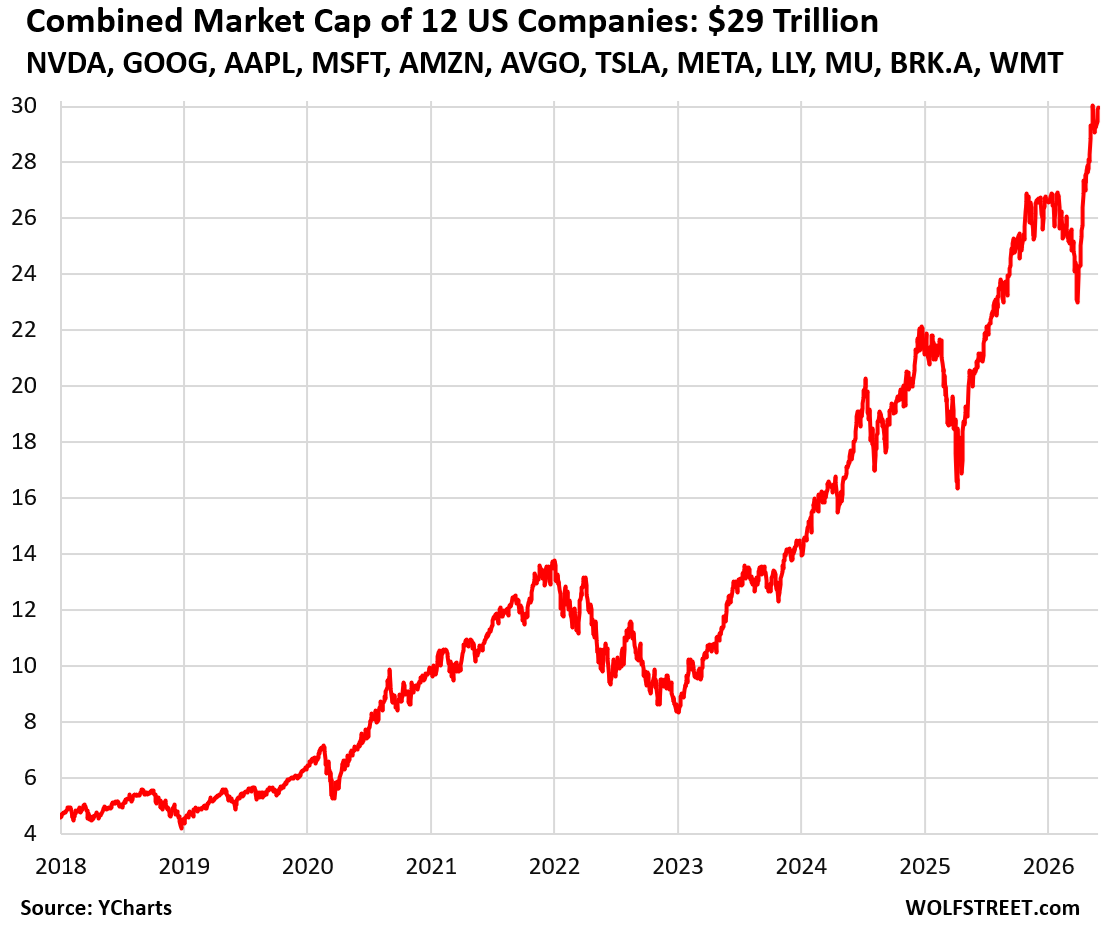
Stock market concentration in a handful of tech giants has reached levels that defy any historical precedent. According to recent data, the 12 largest U.S. companies now represent a combined market cap of $30 trillion—a figure that exceeds the value of every publicly traded company in any other country except China. This isn't a new phenomenon, but its current magnitude is unprecedented: in 1990, the top 10 companies accounted for just 10% of the total market; today, the top 12 make up over 30% of the S&P 500.

This isn't just a statistical curiosity. When such a massive portion of market wealth sits in so few names, any correction in those stocks can trigger a domino effect that drags down the entire system. Fund managers, forced to track their benchmarks, have bought these names at any price, creating a self-fulfilling prophecy that now threatens to reverse. The problem is structural: capitalization-weighted indices like the S&P 500 assign more weight to larger companies, forcing passive funds to buy more of the same stocks, further inflating their valuations. It's a vicious cycle that only breaks when the bubble pops.
“Twelve companies are worth $30 trillion. If they pop, a recession isn't a possibility—it's a certainty.”
By the Numbers

- Total market cap: $30 trillion, equivalent to 110% of U.S. GDP and more than the combined GDP of China, Japan, and Germany.
- Number of companies: Just 12 firms hold this wealth, mostly in tech: Apple, Microsoft, Nvidia, Alphabet, Amazon, Meta, Tesla, Berkshire Hathaway, Eli Lilly, Broadcom, Visa, and JPMorgan Chase.
- Correction risk: A 20% drop would wipe out $6 trillion in household wealth, nearly 30% of U.S. GDP.
- Pension fund exposure: Millions of American retirees have their future tied to these 12 stocks through index funds. Public pension funds like CalPERS have significant exposure to these names.
- Historical concentration: In 2000, the top 5 companies made up 18% of the S&P 500; today, the top 12 exceed 30%. The last time concentration was this high was just before the dot-com crash.

Why It Matters
Financial history is littered with examples of excessive concentration ending in tears: the Nifty Fifty in the 1970s, the dot-com bubble in 2000, the banks in 2008. Each time, investors believed "this time is different." And each time, the gravity of valuations eventually won. In the current case, valuations are extreme: Nvidia trades at over 50 times earnings, Microsoft at 35 times, and Tesla at over 70 times. These multiples are unsustainable without perpetual revenue and profit growth, something history shows is unlikely.
The winners from this dynamic have been clear: early shareholders of these 12 companies and passive fund managers collecting fees for replicating increasingly distorted indices. The potential losers are everyone else: retail investors buying ETFs without checking the holdings, retirees with 401(k)s overweight in tech, and anyone relying on the stability of the financial system. Moreover, concentration creates systemic risk for the market itself: if one of these companies fails or collapses, the contagion effect could be devastating.
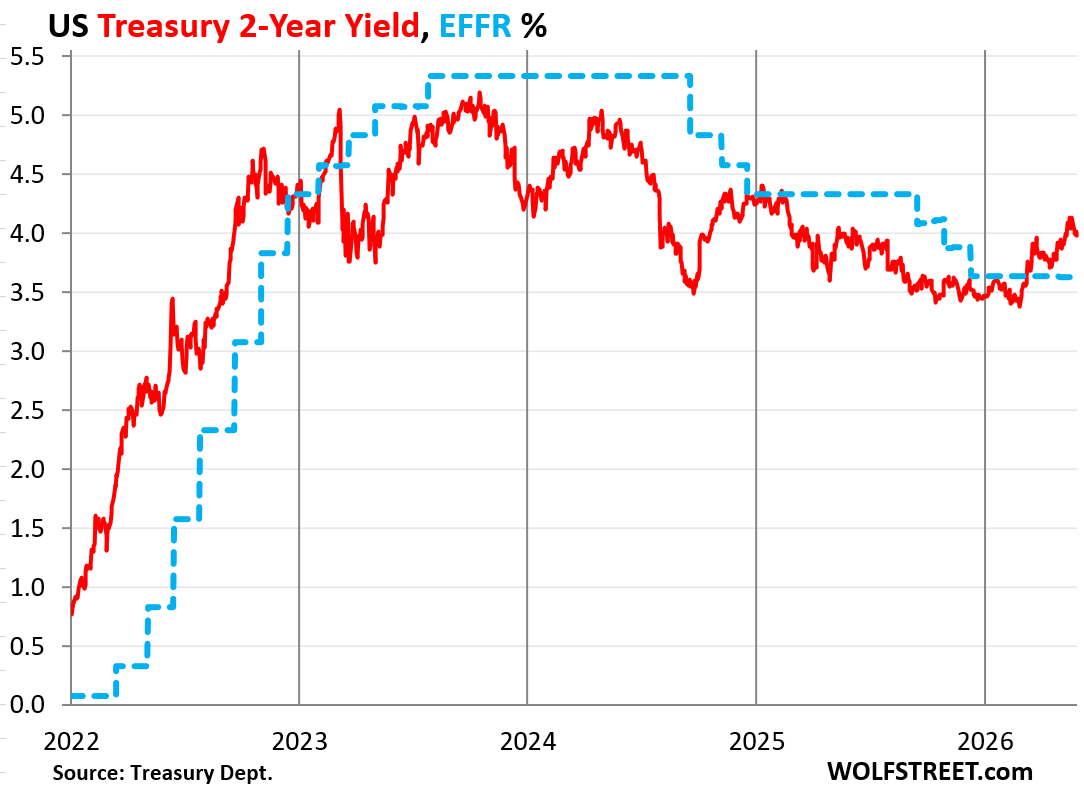
What many overlook is the wealth effect. When household portfolios lose value, consumption contracts. And when consumption contracts, companies earn less, leading to layoffs and further stock declines. It's a vicious cycle that policymakers have few tools to break, especially with interest rates already elevated. The Federal Reserve has raised rates to 5.5%, limiting its ability to stimulate the economy through cuts. If the bubble bursts, the room for maneuver will be minimal.
What This Means For You
- 1Diversify for real. Buying an S&P 500 ETF isn't enough; that index is now dominated by the same 12 names. Seek exposure to value, small-cap, international markets, and defensive sectors like healthcare and utilities. Consider equal-weight ETFs that avoid overconcentration.
- 2Check your pension fund. If you have a 401(k) or an index fund, see how much weight Apple, Microsoft, Nvidia, and the other giants carry. If it's over 30%, consider rebalancing into more balanced options. Many plans offer target-date funds that automatically adjust allocation, but even those may be overweight in large tech.
- 3Prepare for volatility. When $30 trillion is at stake, 5% single-day moves won't be exceptional. Make sure you have liquidity so you don't have to sell at the worst moment. Maintain a cash reserve of 6-12 months of expenses and avoid excessive leverage.
- 4Consider hedging strategies. Put options on the S&P 500 or inverse ETFs can protect your portfolio in a downturn. However, these strategies have costs and should be used sparingly.
What To Watch Next
The upcoming earnings reports from these 12 companies will be crucial. Any sign of slowing revenue or profit growth could be the trigger for a broad correction. Pay special attention to the most extreme valuations—those trading above 40 times earnings. Nvidia, Tesla, and Broadcom are in the crosshairs. If their revenue guidance misses expectations, the market could punish them severely.
Also watch the Federal Reserve's next moves. If rates stay high for longer, the cost of capital for these companies will rise, making their current valuations unsustainable. The September pension fund rebalancing season could be another inflection point, as managers are forced to sell to meet diversification mandates. Additionally, the November 2026 presidential election could bring regulatory uncertainty, especially for the tech sector, with potential antitrust actions or tax changes.
The Bottom Line
Thirty trillion dollars in 12 stocks isn't a sign of market strength—it's a sign of systemic fragility. The next time someone tells you buying the index is safe, remember that safety is an illusion when diversification is just a mirage. The time to adjust your portfolio is now, before the market adjusts it for you.
The question isn't whether these 12 companies will fall, but when and how deep the blow will be. And when it comes, don't say we didn't warn you. Investors who act prudently today will be better positioned to weather the storm. History teaches us that bubbles always burst; the only unknown is the timing. Don't wait until it's too late.