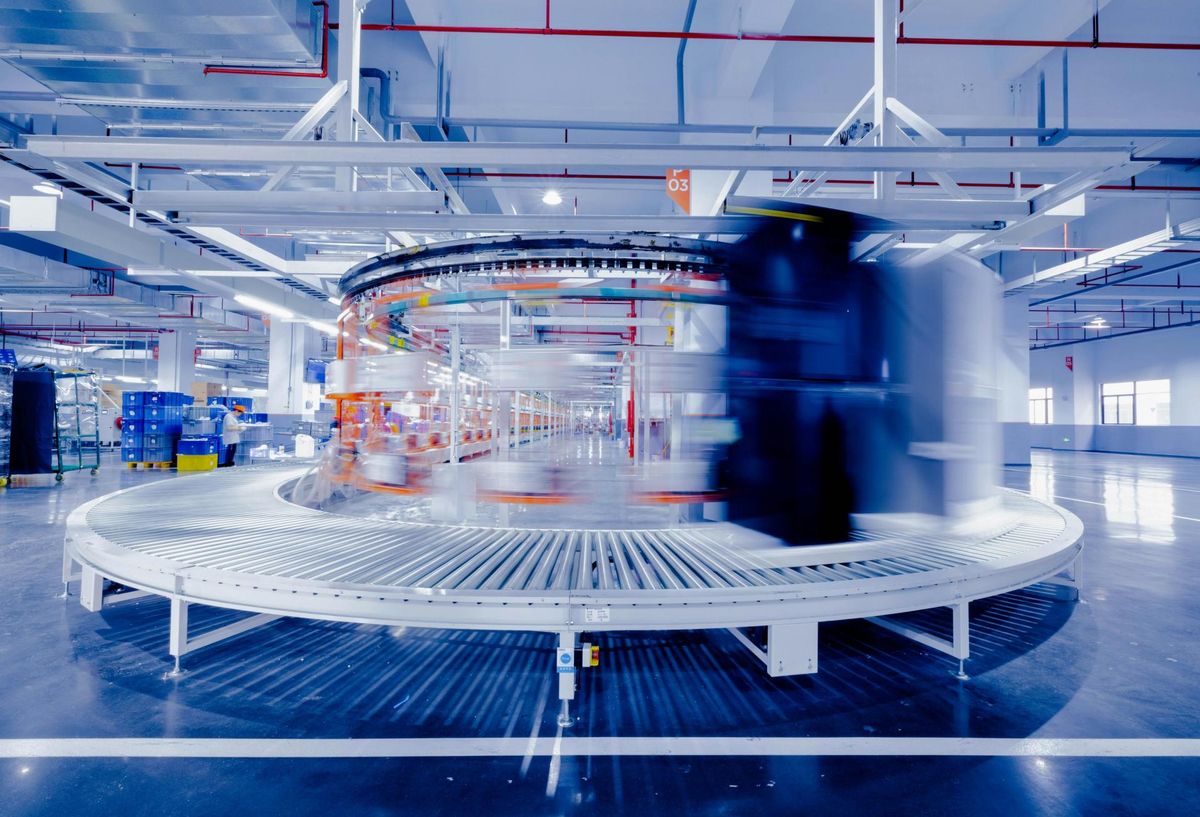
U.S. industrial landlords are finally catching a break. A new Cushman & Wakefield report shows the logistics market is tilting ever so slightly in their favor as the sector digests the massive wave of pandemic-era deliveries. After two years of rising vacancy and softening rents, the pendulum is beginning to swing back. Net absorption of industrial space topped 50 million square feet in Q1 2026, the strongest quarterly showing in three years. That's a clear signal that the oversupply built up during the e-commerce boom is finally being absorbed. For context, at the peak in 2022, quarterly net absorption reached 80 million square feet, then bottomed out at 20 million in mid-2024. The current recovery, while modest, represents a genuine inflection point.

But don't pop the champagne yet. The global backdrop remains soft — weakness in Europe and Asia, plus lingering trade tensions, are capping any aggressive rebound. Cushman & Wakefield warns the recovery will be uneven: Sun Belt and Midwest markets are tightening, while coastal gateways like Los Angeles and Long Beach still face downward rent pressure. In Los Angeles, the vacancy rate sits at 7.5%, well above the national average of 6.8%, and rents have fallen 1.2% year-over-year. In contrast, Phoenix boasts a 5.2% vacancy rate and 4.5% rent growth. This divergence reflects a broader supply chain reconfiguration: companies are shifting inventory inland to mitigate geopolitical risks and reduce logistics costs. The trend is structural, not cyclical, and it favors markets like Dallas, Atlanta, and Nashville.
“The landlord tilt is real but fragile — it hinges on absorption continuing to outpace new supply.”
By the Numbers