Hormuz Blockade: How an energy crisis is reshaping global real estate
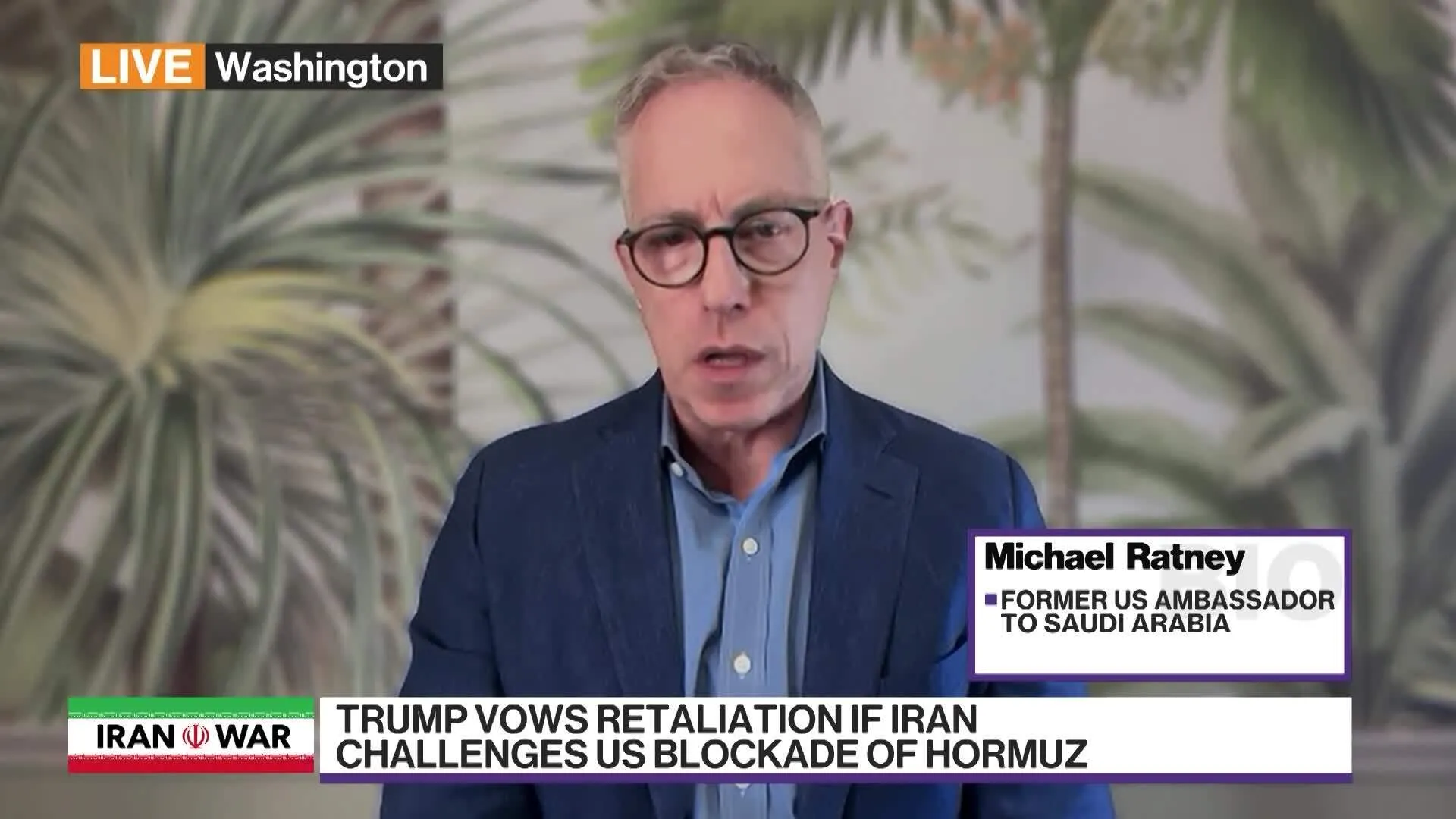
Former Ambassador Michael Ratney's warning about a potential military blockade of the Strait of Hormuz represents an 'enormous injection of risk' to global ener
"A Hormuz closure isn't a remote event for developers; it's a direct operational risk that can turn a profitable spreadsheet into an overnight liability,"…
The Strait of Hormuz, that narrow 21-mile-wide maritime passage between Oman and Iran, could become the epicenter of the next global economic crisis.
Ratney's statement, made in response to the Trump Administration's plans to deploy significant naval capabilities to the region, must be understood…
The Strait of Hormuz, that narrow 21-mile-wide maritime passage between Oman and Iran, could become the epicenter of the next global economic crisis. Former US Ambassador Michael Ratney's public warning about a potential military blockade isn't merely another rhetorical exercise on the complex geopolitical chessboard. It's an alarm bell with direct, quantifiable ramifications for fundamental sectors of the economy, with real estate being one of the most exposed. Global property markets, already navigating the turbulent waters of the post-pandemic era and structural shifts in work, must now brace for an energy shock that could redefine development costs, capital flows, and asset valuation for the remainder of the decade.
The Big Picture
Ratney's statement, made in response to the Trump Administration's plans to deploy significant naval capabilities to the region, must be understood in its full historical and economic context. The Strait of Hormuz isn't simply a shipping lane; it's the vital artery of global energy trade. Approximately 20% of the world's daily consumed oil transits its waters, equating to about 21 million barrels per day. This figure includes nearly all the production from countries like Saudi Arabia, Iraq, the United Arab Emirates, Kuwait, and Qatar, plus the main outlet for Iranian exports. The interdependence created by decades of globalization means a disruption here is transmitted instantly through supply chains that feed industries on every continent.
For the real estate sector, the connection is direct and multifaceted. Construction is energy-intensive not only in the operation of heavy machinery but in the very production of its fundamental materials. Cement, for instance, requires kiln temperatures exceeding 2,550°F (1,400°C), a process that consumes vast amounts of fossil fuels. Steel production is equally energy-voracious. Even materials like glass and insulation polymers rely on hydrocarbons as feedstocks. A prolonged blockade would trigger a cost spiral beginning with Brent and WTI crude prices, but quickly filtering into industrial commodity prices, sea and land freight rates, and finally into the pricing of construction contracts signed with material cost adjustment clauses.
construction crane stalled on a high-rise building site
Recent history offers a playbook for what could come. During tensions following the 2019 drone attack on Saudi oil facilities, and again during the 2021-2022 naval crises, global markets experienced sharp spikes. Prices for key materials like rebar and Portland cement saw increases of 15% to 30% within weeks in markets as distant as Western Europe and Southeast Asia. These shocks, though temporary, left scars: public infrastructure projects were delayed, tight-margin residential developments became unviable, and numerous mid-sized contractors faced technical bankruptcies. What differentiates the current warning is its potential scale. An active military blockade, unlike isolated incidents, could disrupt the flow not for days, but for weeks or even months, creating not a spike but a sustained high plateau of prices that would strangle the financial viability of pipeline projects.
“"A Hormuz closure isn't a remote event for developers; it's a direct operational risk that can turn a profitable spreadsheet into an overnight liability," warns a senior cost analyst at a global consultancy firm.”
By the Numbers
By the Numbers
Critical Daily Transit: 20% of global oil (≈21 million barrels/day) passes through the Strait of Hormuz, making it the planet's most important energy chokepoint.
Historical Construction Impact: Previous geopolitical tensions in the Gulf (2019-2022) triggered immediate 15-30% increases in global construction material costs, with effects lasting several quarters.
Extreme Regional Dependence: Europe imports roughly 70% of its oil via routes including Hormuz; for Asia, the figure exceeds 80%, making economies like Japan, South Korea, and India hyper-vulnerable.
Contagion Speed: Oil futures markets typically reflect Gulf geopolitical shocks in under 48 hours, with the impact on physical prices following within 7-10 days.
Cost Composition: In large-scale projects (skyscrapers, logistics complexes), materials can account for 50% to 60% of total construction cost, and a significant fraction of that cost is embedded energy.
REIT Exposure: Commercial REITs with portfolios concentrated in Europe and Asia typically have 25% to 40% of their annual operating expenses directly or indirectly linked to energy costs.
The implications branch in two main directions: immediate risks to project profitability and viability, and longer-term structural shifts in capital flows and asset valuation. For active developers, the calculation is brutally simple. Development margins for Class A commercial projects in mature markets typically range from 10% to 20% of total cost. A sudden 20% increase in construction costs, driven by higher steel, cement, and transport prices, can completely erase that margin, turning an approved project into a certain loss. This is particularly dangerous for projects already under construction with fixed-price contracts or limited adjustment clauses. Many mid-sized firms operate with revolving credit lines tied to construction progress; a massive cost overrun could trigger credit covenant defaults.
For owners and managers of existing assets, the impact is more indirect but equally significant. Commercial REITs, especially those with high exposure to offices in European and Asian cities, would face a dual pressure. On one hand, building operating costs (heating, cooling, common electricity) would skyrocket, compressing NOI (Net Operating Income) margins at a time when space demand is already under pressure from hybrid work. On the other hand, the macroeconomic uncertainty generated by a prolonged energy crisis could stall corporate tenants' expansion decisions, further reducing demand and increasing vacancies. Valuation models based on discounted cash flows would see cap rates expand, putting downward pressure on asset prices.
Yet, in every crisis there are relative winners and strategic opportunities. Real estate markets in net energy-exporting countries—like Norway, Canada, and certain nations in Latin America and the Gulf—could experience unexpected capital inflows. Global institutional investors, seeking shelter, might reallocate capital toward these markets, perceived as more resilient or even beneficiaries of higher energy prices. More fundamentally, the Hormuz threat exponentially accelerates an already underway trend: the premium for energy efficiency. Buildings certified under standards like LEED Platinum, WELL, or those with on-site solar generation and advanced energy management systems will cease to be a marketing 'nice-to-have' and become strategically valuable assets. Their lower exposure to energy price volatility will translate into more stable, predictable cash flows, justifying higher valuation multiples. Developers who have integrated these features will see a decisive competitive advantage.
What This Means For You: Immediate and Strategic Actions
What This Means For You: Immediate and Strategic Actions
If you are a developer or contractor with active projects, priority number one is contractual risk review. Examine your material supply contracts (steel, cement, glass) to identify force majeure clauses, delivery terms (Incoterms), and price adjustment mechanisms. A CIF (Cost, Insurance, and Freight) contract designating a Gulf port as the point of origin could become impracticable overnight. Supplier diversification, seeking regional sources or sources from countries not reliant on Hormuz, must be accelerated, even if it carries an initial premium cost.
For institutional investors, funds, and family offices with sector exposure, the moment demands tactical rebalancing and deep scrutiny:
1Conduct a granular energy exposure analysis of your real estate portfolio. Looking at electricity bills isn't enough. Calculate the percentage of each asset's operating costs (including maintenance, common systems, pool heating, etc.) that depends on fossil fuels. For development assets, model stress scenarios with 25%, 50%, and 100% increases in key material prices.
2Accelerate investments in energy resilience as strategic insurance. This goes beyond installing solar panels. It includes deep energy audits, thermal envelope modernization (façades, windows), upgrading HVAC systems to high-efficiency technologies, and implementing IoT-based energy management platforms. The return on this investment is no longer measured just in savings, but in reduced volatility and preservation of asset value.
3Reassess sector and geographic allocation. Reduce relative weight in commercial REITs with high concentration in office properties in net energy-importing European and Asian cities. Consider increasing exposure to less cyclical sectors (last-mile industrial logistics, data centers) and to markets in energy-exporting countries or those with diversified energy matrices (e.g., France with nuclear, Brazil with hydro).
4Monitor leading indicators, not lagging ones. Instead of waiting for quarterly reports to show the damage, closely track Brent crude futures prices, Baltic Dry Index freight rates for Gulf routes, and announcements from major steelmakers and cement producers on pricing and availability.
executive analyzing multiple screens with energy market data and construction blueprints
What To Watch Next: The Immediate Catalysts of 2026
The next 60-day window will be crucial for calibrating the real magnitude of the risk. The first inflection point will be the OPEC+ meeting scheduled for late April. If member countries, led by Saudi Arabia and Russia, anticipate serious supply disruptions, they might announce a preventive, coordinated production increase to fill any gaps and stabilize markets. Such a move would send a reassuring signal. However, if OPEC+ decides to maintain or even deepen its current production cuts, it would be an unequivocal signal that they expect a supply crisis and are seeking to maximize revenue in a high-price environment, preparing for the worst.
On the real estate data front, all eyes will be on the Turner Construction Cost Index for Q2 2026, due for publication in May. This index, a global benchmark, breaks down costs by material categories and regions. An increase above 5% quarterly in the subcategories of structural steel, cement, and transportation/logistics costs would confirm that geopolitical risk has already materialized into tangible cost pressures for the industry. Equally important will be the Bureau of Labor Statistics' construction materials price index in the U.S. and its equivalents in Europe (Eurostat) and Asia.
Finally, watch the statements and moves of major real estate investment funds and private equity. If players like Blackstone, Brookfield, or large sovereign wealth funds begin announcing selective sales of assets in vulnerable markets or, conversely, deploy capital to acquire energy-efficient assets at distressed prices, it will be a powerful leading indicator of where smart capital is heading.
The Bottom Line
The Bottom Line
The Hormuz warning transcends conventional geopolitical analysis. For the global real estate industry, it represents an operational and valuation inflection point. In 2026, energy resilience ceases to be a matter of corporate responsibility or marketing and becomes the core of risk management and value creation. Developers who haven't secured their supply chains and diversified their material sources will face existential cost pressures. Investors who haven't rebalanced their portfolios toward less exposed assets and markets will see their returns eroded.
The paradox is that this potential crisis could be the ultimate accelerator of the green transition in the construction sector, forcing innovations in low-carbon materials, operational efficiency, and passive design that would otherwise have taken years to adopt. The lesson for 2026 is clear: in an interconnected world, geopolitics is no longer background noise for real estate businesses; it's a direct cost factor. The competitive advantage will belong to those who not only watch the Strait of Hormuz on a map but act with foresight in their own spreadsheets, contracts, and development strategies. Preparation today isn't an option; it's the only line of defense against tomorrow's volatility.